Digital Marketing Agency in Karachi | Web Development & SEO Services

Blogs

Backlinks in SEO
Blogs

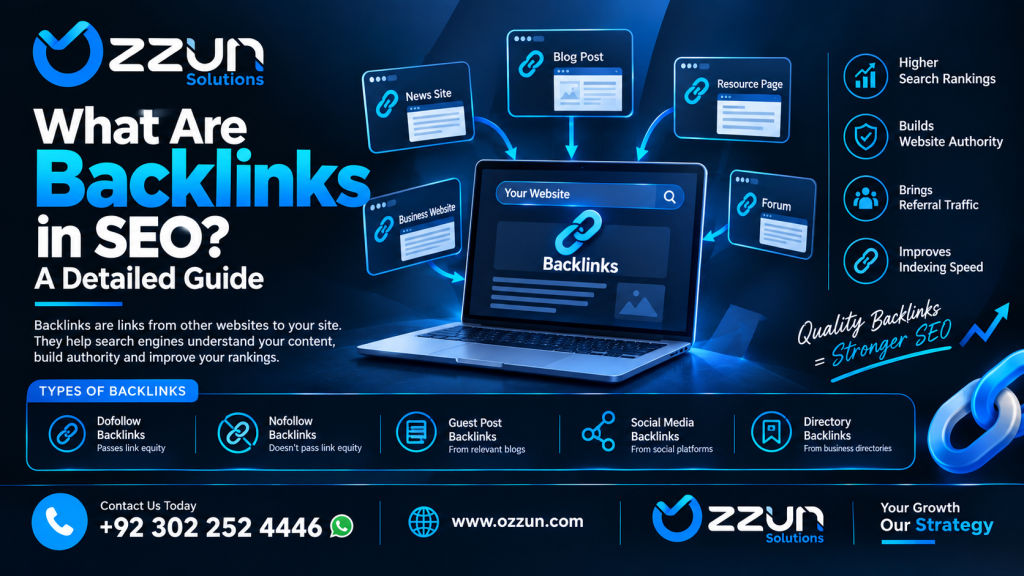
What Are Backlinks in SEO: A Detailed Guide

Backlinks in SEO are links from one website to another. They can help search engines find pages, recognize relationships between websites, and judge the reputation and relevance of content. However, not all backlinks are equal. In general, you want to get a few relevant, natural links from trustworthy sites rather than a lot of low-quality or manipulative links. Google recommends focusing on helpful content and adhering to its Search Essentials rather than trying to manipulate rankings through links. Introduction If you are learning SEO, you will hear the term “backlinks” a lot. A backlink is just a link on one website that sends visitors to another website. For instance, if a technology website links to an article on your business website, that’s a backlink to your page. Backlinks have been an important part of SEO for many years, but modern link building is not about collecting as many links as possible. Relevance, quality, context, and natural placement matter. How Do Backlinks Function? Say you have two websites, and both of them are publishing something on the same topic. Website A gets links from several relevant and trustworthy websites. Website B has hundreds of links from unrelated or low-quality websites. It’s not just about the number of links. A relevant backlink can help users find useful information and give search engines more context about the linked page. This means that for businesses, a good backlink strategy must focus on earning links that are relevant to the audience rather than just increasing the backlink count. Why Are Backlinks Important for SEO? Backlinks can provide several SEO benefits. Benefit How It Helps Website discovery Links can help search engines find pages Referral traffic Visitors can reach your website from another site Authority signals Quality links can support your site’s reputation Relevance Contextual links can connect related topics Brand visibility Mentions on other websites can introduce your business to new audiences Google’s SEO documentation emphasizes making websites discoverable, understandable, and useful for Search. Links are one part of that wider SEO ecosystem. What is a Quality Backlink? A good backlink is not a link from just any website. Here are a few things that can make a backlink more valuable: Relevance: The website or page you link to should be in some way related to your topic. The link should be in the context of useful content. Trust: A real, established website is generally better than a site created mostly to post links. Editorial value: The link should guide the reader to more useful information. Natural placement: Don’t shoehorn links into content for SEO. The aim is to build a backlink profile that appears natural, as the links are there for real users and valuable information. Backlinks versus Internal links Backlinks are not the same as internal links. A backlink is a link from another website to your website. An internal link is a link that connects two pages on your own website. For example, Ozzun could write an article on local SEO and internally link it to its SEO services page. When another website mentions that article and adds a link to it, that external link is a backlink. Both types of links help website navigation and content discovery, but they have different functions. How Can You Get Backlinks? Businesses can use strategies such as: A good piece of content is more likely to be naturally referenced as it gives something worthwhile to share. What Backlinks to Avoid? Not all backlinks are created equal. Businesses should be wary of: Google’s Search Essentials include spam policies the key to a successful SEO strategy is focusing on real value, not shortcuts. How to Check Your Backlinks SEO professionals use tools such as Google Search Console and third-party SEO platforms to monitor a website’s link profile. Don’t just look at the number of backlinks when evaluating them. Check out: A good backlink strategy is about understanding the quality and context of your links, not just looking for the number to go up. FAQ’s What are backlinks in SEO?Backlinks are links from other websites that point to pages on your site. They can assist with discovery, referral traffic, relevance, and overall SEO visibility. Backlinks still matter in 2026?Yes, links are still part of the overall search ecosystem, but they are not the sole focus of a modern SEO. Technical quality, helpful content, relevance and user experience are also important. Is one good backlink better than lots of bad ones?In many cases, a relevant and trustworthy backlink is more useful than a large number of irrelevant or spammy links. How do I acquire natural backlinks?Produce useful content that other websites actually want to reference, create original resources, nurture relationships in your industry, and share valuable information with relevant audiences. Do harmful backlinks hurt SEO?Spammy or manipulative link building practices can be a source of SEO risks. Don’t try to build bad links, just build good links that are natural and relevant. Summary Backlinks in SEO is something that everyone working on website growth needs to know about. A backlink is a connection between one website and another. It can help with discovery, referral traffic, relevance and visibility online. But link building doesn’t just mean getting hundreds of random links. The right way to do it is to create useful content, get relevant mentions, and build relationships with trusted websites. Backlinks should be looked at by search marketers as one piece of an all-encompassing SEO strategy which includes quality content, technical optimization, internal linking, user experience and a website that actually benefits its audience.

Holistic SEO
Blogs

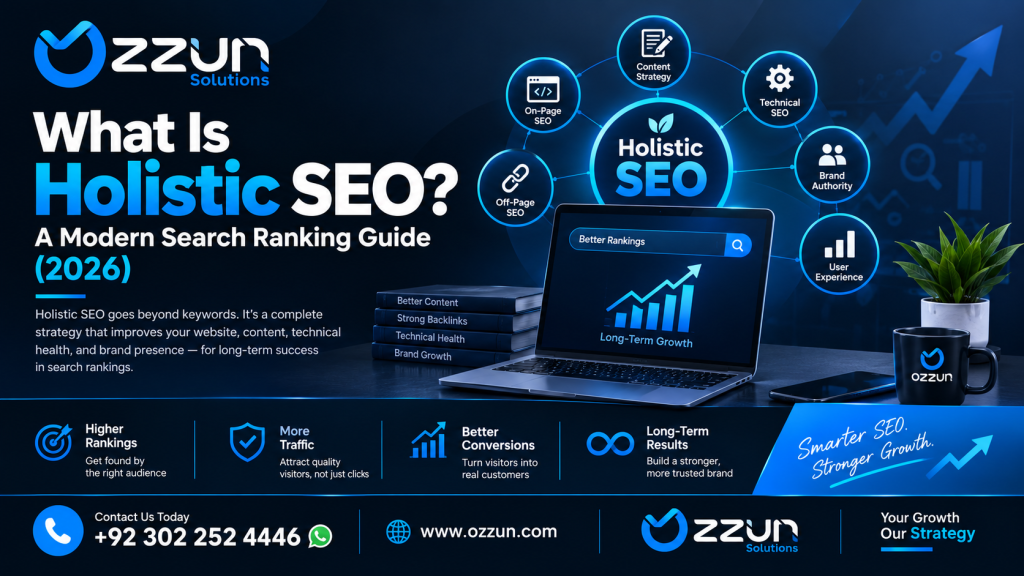
What Is Holistic SEO? A Modern Search Ranking Guide (2026)

Holistic SEO is a search engine optimization strategy that considers the whole website rather than concentrating on just keywords, backlinks, or single pages. It’s the combination of technical SEO, useful content, user experience, website authority, search intent, and overall website quality that creates a stronger search presence. As Google Search continues to add AI-powered experiences like AI Overviews and AI Mode, this approach is becoming even more important in 2026. Google says its generative search features are still built on top of core search ranking and quality systems. Introduction. SEO has come a long way over the years. In the old days, there was a lot of focus that a business could put on keywords, backlinks, and basic on-page optimization. Today, search engines are better at understanding context, user intent, content quality, website experience, and the overall relevance of a business. This is where holistic SEO comes in. A comprehensive strategy connects different parts of a website and improves them together rather than treating SEO as a collection of separate tasks. What Is Holistic SEO? Holistic SEO is the optimization of a website as a whole system. Instead of just asking, “What keyword should this page rank for?” the strategy asks broader questions: The aim is to develop a website that is really useful to both visitors and search engines. The Main Elements of Holistic SEO A successful holistic SEO strategy usually brings several SEO areas together. SEO Area Main Purpose Technical SEO Helps search engines crawl and understand the website Content SEO Provides useful and relevant information User Experience Makes the website easier and more enjoyable to use Search Intent Matches content with what users actually want Authority Builds trust through expertise and credible signals Internal Linking Connects related pages and strengthens site structure These elements work together rather than operating as isolated SEO activities. Why Does User Experience Matter A website can have good keywords and strong backlinks, but a poor experience can still hurt its ability to turn visitors into customers. Key areas are Modern SEO is more and more tying search visibility to the quality of the overall site experience. Content Should Align with Search Intent Understanding why someone searches for a specific term is another important part of holistic SEO. For instance, if someone is searching for “best SEO agency in Karachi,” they are likely comparing service providers, while if they search for “what is SEO,” they are probably looking for an explanation. So the content must be an answer to the real question, not just a repetition of the keyword. Google’s current messaging is that the fundamentals of SEO still apply to AI-powered search, meaning useful, well-structured content is important for both traditional and generative search experiences. Holistic SEO and AI Search, 2026 People are discovering information in new ways thanks to AI-powered search. Now search platforms can provide overviews of information and assist people in finding answers without having to go to different websites. This makes clarity, relevance, authority, and structured information even more important. A holistic strategy can help businesses create a simpler website for users and search systems to understand. As the wider search ecosystem grows, including search engines, social platforms, AI assistants, and other discovery channels, brands are also thinking more about visibility beyond traditional Google results. How to Create a Holistic SEO Strategy Businesses can begin with a simple process: FAQs What is the difference between holistic SEO and traditional SEO?Holistic SEO uses the same tactics as traditional SEO, but they are part of a larger strategy that takes into account the entire website, including content, technical health, UX, authority, and search intent. Will holistic SEO matter in 2026?Yes. As search gets more contextual and AI-driven, businesses need more than just keyword optimization. A well-defined website strategy can boost visibility across today’s search experiences. Is holistic SEO the way to improve AI search?Yes, it can. Google says its AI search features are built upon its existing search ranking and quality systems, so solid SEO basics still count. What is the most important part of holistic SEO?There is not one element. Technical health, useful content, search intent, user experience, authority, and website structure should all work together. Summary Holistic SEO is about looking beyond single keywords and thinking of SEO as a whole website plan. In 2026, businesses need to focus on useful content, fulfilling search intent, improving technical performance, building authority, and delivering a great user experience. As search continues to evolve toward AI-powered discovery, companies that build truly useful, trustworthy websites will be better positioned for long-term visibility. SEO today is more than simply ranking a single page. It’s about building a website that search engines, automated systems, and real people can understand and trust.

Google Ads AI Max
Blogs

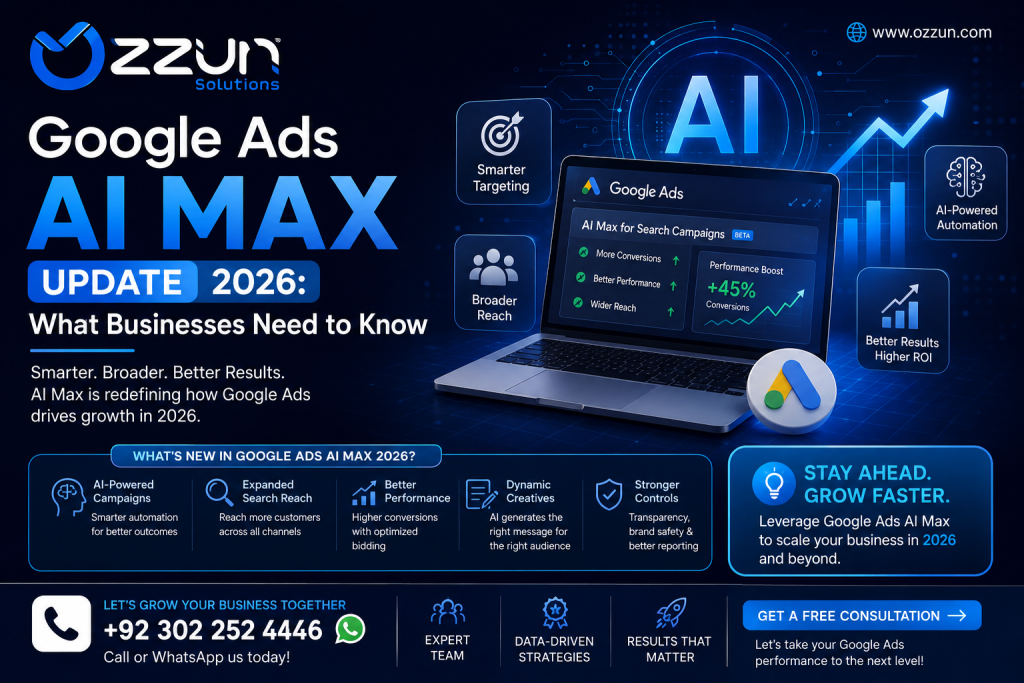
Google Ads AI Max Update 2026: What Businesses Need to Know

Google Ads AI Max is Google’s new AI-powered upgrade for Search campaigns and will begin automatically upgrading eligible legacy campaign features in September 2026. Google has pushed the full Dynamic Search Ads (DSA) transition to February 2027, but campaigns with Automatically Created Assets (ACA) and campaign-level broad match settings will start to be auto-upgraded in September 2026. Google is advising advertisers to switch to AI Max early so they can review the new controls before the automatic transition. What Is Google Ads AI Max? Google Ads AI Max is designed to use artificial intelligence to help search campaigns discover more relevant queries and improve how ads and landing pages are matched to users. AI Max can access a broader range of signals and AI-powered capabilities, beyond traditional keyword targeting, to identify more opportunities. Based on its internal data, Google says the full AI Max feature set has led to an average 7% lift in conversions or conversion value at a similar CPA or ROAS over just search term matching. What Is Changing in September 2026? The September 2026 update is important because some existing Google Ads features are moving toward AI Max automatically. Google Ads Feature What Is Happening Automatically Created Assets Automatic upgrades begin in September 2026 Campaign-level Broad Match Automatic upgrades begin in September 2026 Dynamic Search Ads Full transition extended toward February 2027 AI Max becomes the newer Search campaign approach Advertiser Controls New AI Max controls become available Google says eligible upgrades are expected to conclude by the end of September for the features included in this phase. Why does this matter for business? This is more than a name change if you’re a business running Google Ads. AI Max is redefining the ways campaigns can discover search opportunities and build or customize ad experiences. This can be particularly useful for businesses looking to reach customers who are searching in different languages, with longer queries, or with variations that might not be an exact match to the keywords originally added to a campaign. But advertisers shouldn’t expect AI to produce the best outcome without supervision. Campaign objectives, landing pages, tracking conversions, and budget still count. What should advertisers do before the upgrade? Businesses should take a look at their existing search campaigns before automatic changes start. First, determine which campaigns are using the affected legacy features. Next, look at conversion tracking and ensure that key conversions are tracked correctly. Advertisers should also consider the landing pages and make sure that each page is clearly aligned with the service or product being advertised. A bad landing page experience can’t be saved by AI targeting. Finally, check out the new AI Max controls and try them out slowly instead of changing every campaign at once. AI Max Versus Traditional Search Campaigns With traditional search campaigns, advertisers often have to spend more time managing keywords, search terms, and ad variations manually. AI Max shifts more of that work to Google’s automated systems. This is therefore the biggest difference in the balance between manual control and AI-driven growth. Advertisers still retain controls, but Google’s systems can play a bigger part in finding the right searches and personalizing parts of a campaign. If your business relies on Google Ads to drive leads or sales, knowing about this change ahead of the automatic upgrade can make managing your campaigns easier. Will Google Ads AI Max Replace Everything? It will not. Google isn’t just killing off all search advertising. Instead, it’s shifting a handful of older features into its newer AI-powered search campaign system. The timeline also varies for different features. Google has specifically extended the sunset and automatic upgrade timeline for Dynamic Search Ads to February 2027. Automatic upgrades for Automatically Created Assets and campaign-level broad match settings will start in September 2026. FAQs When will Google Ads AI Max be launched?Google Ads AI Max is available now, and automatic upgrades for some eligible legacy Search campaign features start in September 2026. What is AI Max in Google Ads?Google Ads AI Max is a new suite of AI-powered features for search campaigns that helps advertisers discover more relevant search opportunities and improve campaign performance. Are dynamic search ads going away?Google has delayed the deadline for the Dynamic Search Ads transition, with the full automatic upgrade now slated to begin in February 2027, as opposed to September 2026. Do companies need to change their Google Ads campaigns?Businesses using impacted legacy features are encouraged to review their campaigns and familiarize themselves with AI Max controls ahead of automatic upgrades. Is Google Ads AI Max good for small businesses?It can be helpful for small businesses that want Google’s AI to find more opportunities in search, but campaign performance still depends on factors like budget, targeting, conversion tracking, ad quality, and landing page experience. Conclusion The Google Ads AI Max update. One of the important search advertising changes for businesses in 2026 is the Google Ads AI Max update. Some legacy features will automatically upgrade beginning in September, and the full switch to Dynamic Search Ads has been pushed out to around February 2027. Businesses should now review their campaigns, understand the new AI Max controls, and make sure that conversion tracking and landing pages are ready for the transition.

Zero-Click Searches
Blogs

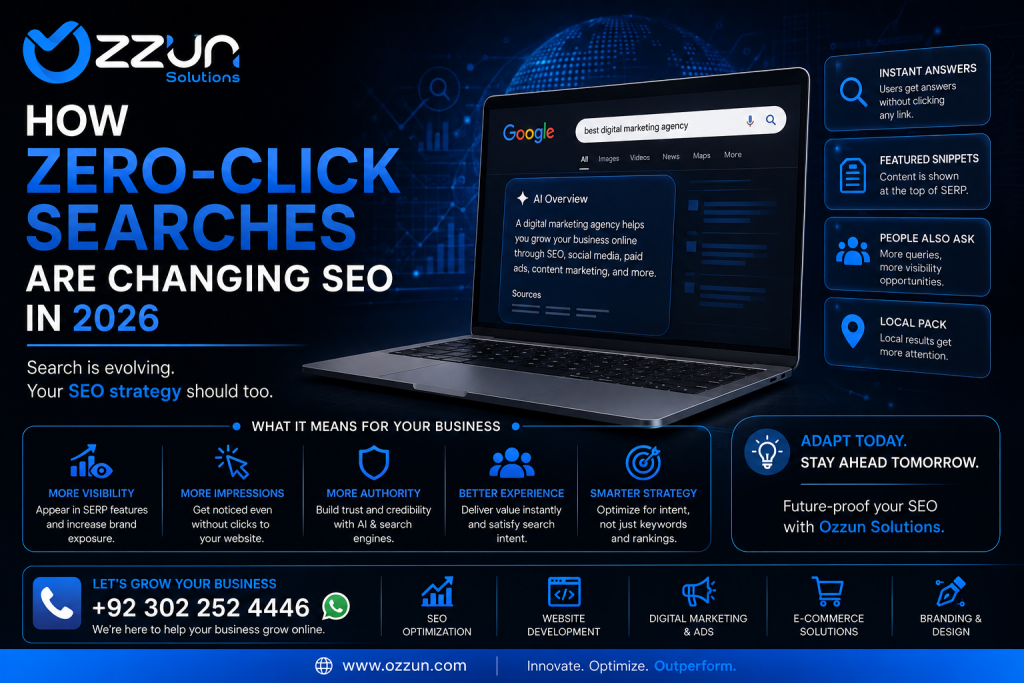
How Zero-Click Searches Are Changing SEO in 2026

Zero-click searches occur when users find the information they need on a search results page without clicking on a website. Instant information can be provided by AI-generated answers, featured snippets, local results, knowledge panels, and other features. For businesses, this means SEO is not simply about getting clicks to the website anymore. Search visibility, clear answers, brand awareness, and conversions are becoming equally important. Introduction For years, companies measured SEO success mostly by rankings and organic traffic. The goal was usually to be number one on Google. Search behavior has changed quite a lot, but rankings and clicks still matter. Now users can get answers right inside Google Search. They may not have to go to a website for quick questions, definitions, local info, or comparisons. This behavior has made zero-click searches an important part of modern SEO. What is a Zero-Click Search? When a user searches for something and finds what they need right from the search results, it is called a zero-click search. For example, Google may show an answer, business info, a featured snippet, map results, or other information without the user having to open a web page. The user gets value, but the site might not get a click. That doesn’t mean the business didn’t get anything out of it. Visibility in search results can still build awareness and enhance recognition. Why Zero Click Searches Matter for Business Companies need to understand that search visibility is becoming broader than website traffic. A user might search for a company’s name, read content related to that information, and then at some point search for the brand specifically. Therefore, businesses should consider: Just looking at clicks won’t show you the whole story of how your SEO is doing. How AI Search Affects the Search Journey AI-powered search features are serving up more digestible insights without the need to open multiple sites. This is both a challenge and an opportunity. The downside is that some informational searches may receive fewer clicks. The opportunity is that businesses can be found in new search experiences by publishing useful, accurate, and well-structured content. That means zero-click searches are something that SEO teams should understand, not fear. Adjust Your SEO Strategy A great strategy starts with understanding search intent. Clear answerIf there are important questions, answer them directly near the top of the content. Use Structured ContentEasy to grasp information using clear headings, short paragraphs, lists, tables, and FAQs. Build Authority on the TopicBusinesses should focus on consistently publishing content related to their industry, rather than just sharing whatever articles they can find. Increase Brand VisibilityBusinesses need to be clear about their brand, services, expertise, and unique value proposition across their website and other online channels. Zero-Click Searches vs Traditional SEO Traditional SEO Focus Modern SEO Focus Website rankings Overall search visibility Organic clicks Visibility + clicks Individual keywords Search intent and topics Website traffic Traffic and conversions Blue-link results Multiple search experiences Traditional SEO hasn’t disappeared. Instead, the definition of successful SEO is becoming broader. What Do Businesses Need to Measure? Companies should combine traditional SEO metrics with broader visibility signals. Some useful metrics: Not all searches may convert into clicks, but a page that gets a lot of impressions can still drive business value. Frequently Asked Questions Zero-click searches explainedZero-click searches are searches where users receive the information they need directly in the search results without clicking on a traditional organic result. Zero-Click Searches: Good or Bad for SEO?Not always. They can reduce clicks for some queries, but appearing prominently in the search results can still boost visibility and brand awareness. How to Optimize for Zero-Click Searches for BusinessesBusinesses need to give direct answers, have clear content structures, target search intent, cover topics thoroughly, and have strong technical SEO. Zero-click SEO: the new SEO?No. Traditional SEO is still important. Businesses just need to expand their strategy to include visibility across different search features. Will zero-click searches continue to grow?Search is becoming increasingly interactive and answer-oriented. Thus, companies should get ready for a search environment where visibility is not simply counted by website visits. Summary How zero-click searches are changing the SEO playbook companies need in 2025. Getting a click is still good, but that isn’t the only measure of success. For businesses, how often their brand and content appear throughout the search journey. Businesses can adapt to the changing search landscape by creating helpful answers, focusing on real search intent, building topical authority, and monitoring visibility and conversions. SEO isn’t just about getting people to click. The future of SEO is about getting your business found, useful, and trusted no matter where customers are searching.

Instagram Reels on Google
Blogs

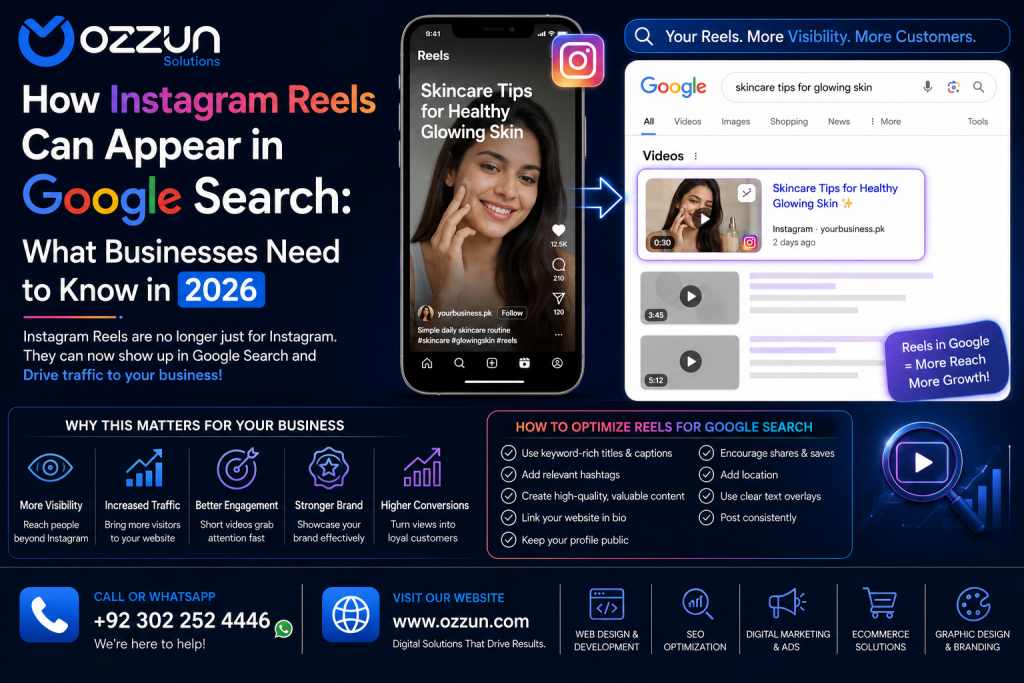
How Instagram Reels Can Appear in Google Search: What Businesses Need to Know in 2026

With Instagram Reels on Google, businesses get another way to reach people outside of the Instagram app. Google’s 2026: Public content from eligible professional Instagram profiles may show up in Google Search Creators and businesses can now see which searches are driving users to their Instagram content via Search Console Platform Properties. Thus, Reels can be thought of as part of a broader search strategy, not just social media posts. Introduction For years businesses thought of Google SEO and social media as two separate marketing channels. That’s changing. People can discover brands across Google, Instagram, YouTube, TikTok, and other platforms, all within the same buying journey. Now, with Instagram Reels on Google, businesses have another opportunity to have their short-form content discovered through search. Google also expanded Search Console to allow businesses to measure the performance of their social and video content in Google Search. Can Instagram Reels Show Up on Google? Yes, public Instagram content that is eligible can show up in Google Search. This is especially true for businesses with professional Instagram accounts because their public posts and Reels can be seen by people searching on Google, not just scrolling on Instagram. This means bigger chance to discover. A good Reel can be seen by someone who is seeking information, products, services or local businesses and not just your current followers or Instagram users. Why Should Businesses Care About Instagram Reels in Google? A business doesn’t need to rely on one platform for visibility. A well-crafted Reel can be used in many ways: This makes Google the interesting part of a modern content strategy, Instagram Reels. Google Search Console Makes Measuring Social SEO Easier One of the biggest developments in 2026 is Google is expanding Search Console. Link supported social and video platforms as Platform Properties to view how your content is performing in Google Search. The supported platforms are Instagram, TikTok, X, and YouTube. The data can be used to answer questions such as: This makes social search visibility a thing that businesses can actually analyze. How to Get Your Instagram Reels to Show Up in Google Making Reels Alone Is Not Enough. The businesses should specify the subject of the content. Use a Clear Topic TitleMake sure a Reel is about one thing that can be understood and not trying to answer a bunch of questions at once. Make captions meaningfulWrite in a natural language that describes what the Reel is about. Relevant words can help give context about the content. Add On-Screen Text RelevantThe video can show important information, which makes the subject easier for the viewers to understand. For example, a business based in Karachi could make a Reel to answer a question like “how to choose the best digital marketing agency in Karachi. Match user intentJust think about what a potential customer would type into Google. For example, a business based in Karachi could make a Reel to answer a question like “how to choose the best digital marketing agency in Karachi. Instagram Reels vs Traditional Website SEO Reels don’t replace a business website. Instead, they can complement it. Instagram Reels Website Content Short and visual More detailed Strong for demonstrations Strong for complete information Easy to share Better for in-depth resources Can support social discovery Can target broader search queries Useful for brand awareness Useful for leads and conversions The strongest strategy can combine both rather than choosing only one. What businesses ought to be doing in 2026 Businesses need to stop treating every Reel like it’s content that disappears after a few days. Instead, make videos about questions and topics that customers are really searching for. A practical way is: In fact, Google’s own documentation now suggests testing the performance of different social formats, including Instagram Reels vs Instagram posts. Frequently Asked Questions Can Google Search show Instagram Reels?Yes. Public Instagram content that is eligible can be indexed and show up in Google Search, providing another possible channel for discovery for businesses. How do you get traffic from Google for Instagram Reels?Users can find eligible Instagram content when it matches what they search for on Google. Search visibility is influenced by the content, the query and relevance, as well as Google’s indexing and ranking systems. Can I see Instagram Reel performance in Google Search?Yes. Supported Instagram accounts, and their Google Search performance, can be connected and analyzed via Google Search Console’s Platform Properties. Does Instagram SEO replace SEO of your website?No. Instagram SEO and website SEO are different. Both can be utilized by businesses to boost their overall online visibility. Is it worth it for businesses to optimize every Instagram Reel for Google?Businesses should aim to create Reels that answer practical questions, explain products or services, or cover topics customers are likely to search for. Not every Reel should be built for search. Summary The existence of Instagram Reels on Google provides a substantial opportunity for businesses to increase their organic visibility beyond traditional website pages. Businesses can now get better insight into how their social content is discovered through search, with Google now offering Search Console reporting for Instagram and other social platforms. The key isn’t just making more Reels. Businesses should create focused content around real customer questions and naturally optimize the supporting text. SEO won’t just be about a business website in 2026. Brands that marry website content, social media and search-focused video can create more opportunities to be discovered across Google’s search ecosystem.

Landing Page for Business
Blogs

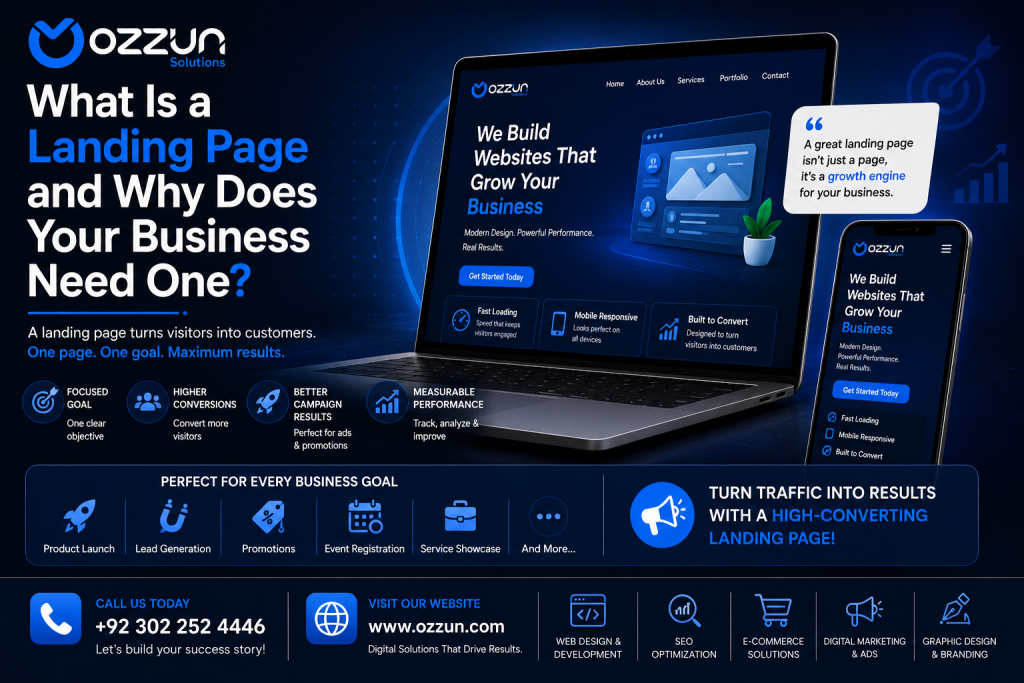
What Is a Landing Page and Why Does Your Business Need One?

A landing page for business is a focused web page designed to encourage visitors to take a single action, such as requesting a quote, submitting an inquiry, booking a service, signing up, or making a purchase. It’s not like a general website page—it minimizes distractions and gives information surrounding one specific offer, which is useful for lead generation and digital marketing campaigns. Introduction Having visitors to your website is important, but the larger goal is converting those visitors into customers. Which is why a business landing page can be valuable. Alternatively, you can send potential customers to a specific page about a particular service, product, or campaign, rather than sending them to a homepage with many different options. A focused page guides visitors to understand what you offer and what to do next. A landing page? A landing page is a standalone page created for a specific marketing goal. For instance, a digital agency that offers website development can develop a page about the website development service. A sample page might have: Every element should serve the main purpose of the page. Why Is a Business Landing Page Important? A landing page for a business can help companies create a more direct route from visitor to potential customer. Instead of requiring visitors to click through a few pages to find the information they are looking for, the page can immediately present the relevant service or offer. This can be particularly useful for businesses that are receiving visitors from advertising campaigns, social media, email marketing, or search engines. Landing Page vs Homepage A homepage and landing page serve different purposes. Homepage Landing Page Introduces the overall business Focuses on one offer or goal Contains multiple sections Has a specific purpose More navigation options Fewer distractions General business information Targeted information Supports overall website navigation Supports a specific campaign A business may need both rather than choosing one over the other. How to Generate Leads Using a Landing Page One of the biggest benefits of a landing page is that it can help you generate leads. For example, a service-based business can have a short form that asks for the visitor’s name, phone number, email address, and their requirements. A clear offer and a simple form can make it easier for interested visitors to get in touch with the business. It is important not to ask for unnecessary information, which may make the form appear difficult to fill. What to Include on a Business Landing Page? A good business landing page should answer the visitor’s most important questions quickly. It should explain: A good experience can be created by using relevant content, social proof, relevant visuals, a good headline, and a clear call-to-action. Landing Page Mistakes to Avoid Businesses can kill the effectiveness of a landing page by making it too complicated. Common problems are: The best thing to do is usually to keep the page focused and make the next step clear. When to Use One for Your Business? A landing page for a business can be useful for a range of marketing activities, such as . For instance, if an ad is promoting SEO services, then sending users to an SEO-specific landing page is more relevant than sending them to a generic homepage. FAQs What is a business landing page?A landing page is a dedicated web page that is created to market a specific service, product, campaign, or offer and persuade visitors to take a specific action. Can a Landing Page Generate Leads?Yes. A defined offer and simple inquiry form can make it easier for prospects to get in touch with a business. Yes, a landing page is different from a homepage.Yeah. A landing page typically has one specific goal or campaign, while the homepage is about the whole business. Does every business require a landing page?Not necessarily, but it can be particularly valuable for companies that are running ad campaigns or that are heavily focused on lead generation. Must a landing page be mobile-friendly?Yes. Your business landing page should be mobile-friendly, tablet-ready, and desktop-compatible. Conclusion: A business landing page can be a targeted way to turn website visitors into leads, inquiries, and customers. Instead of confusing visitors with a ton of options, it gives them one clear choice and then guides them to one main action. For businesses that invest in digital advertising and online marketing, well-planned landing pages can help strengthen the customer journey and make campaigns more focused. You want your page to be simple, relevant, trustworthy, mobile-friendly, and clearly focused on the action you want visitors to take.

Website Cost in Pakistan
Blogs

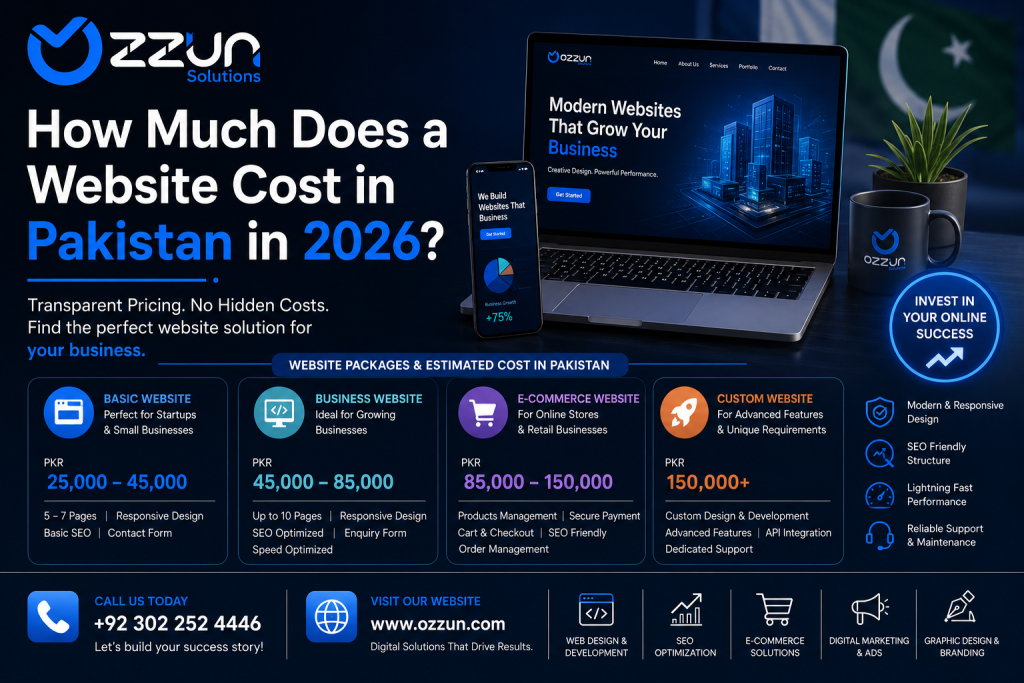
How Much Does a Website Cost in Pakistan in 2026?

How much does a website cost in Pakistan? A basic business website in Pakistan can cost you around PKR 30,000, and advanced e-commerce websites or custom web design can cost you a few hundred thousand and up. The final price depends on pages and design needs, functionality, integrations, content, hosting, and level of customization. There is a wide range of pricing guides available for Pakistan at the moment, as websites can vary greatly in complexity. Introduction For many Pakistani businesses, a website is no longer an optional online presence. It can help customers locate a company, learn about its services, request information, and make purchases. However, one of the first questions that business owners ask is how much does a website cost in Pakistan? There is no fixed price. There is a very big difference (design/development-wise) between a simple company website and a custom e-commerce platform. Basic Website Pricing for Business A basic business website is all that startups, professionals, and small businesses that primarily want to display their services online need. It may consist of: Most current Pakistan pricing guides place basic business websites in the tens of thousands of rupees, but the exact price will vary by developer and requirements. Cost of Professional Business Websites Better design, more pages, better functionality, and features built around business goals are usually found on a more professional website. For example, a company might require the following: The more tailored the project, the more expensive the development is likely to be. Cost of E-Commerce Website An e-commerce website usually comes with a higher cost because it requires features that a normal business website doesn’t require. These might include: The cost of e-commerce can vary greatly depending on the number of products, platform, payment systems, design, and custom functionality. Cost of Custom Website Development Custom websites and web applications are often much more costly than a standard website. That’s because development may include custom databases, dashboards, APIs, user accounts, automation, third-party integrations, or other specialized functionality. For complex projects, the development costs can be in the range of lakhs of rupees and more, as per the requirements. Website Cost Breakdown Website Type Typical Cost Level Best For Basic Website Lower Startups & small businesses Professional Website Medium Growing businesses E-Commerce Website Medium to High Online stores Custom Web Application High Complex business requirements Actual prices vary according to features, design, technology, and development requirements. What determines website pricing? There are a handful of reasons that can alter the website cost in Pakistan. DesignA template-based website will almost always cost less than a totally custom design. FeaturesAdvanced features like booking systems, payment gateways, and customer accounts increase the development requirements. ContentsProfessional copywriting, photography, graphics, and product uploads can also lead to increased costs for the total project. Hosting & DomainA website also requires a domain and hosting. These are typically recurring expenses, not one-time development costs. UpkeepThere may be ongoing costs for updates, backups, security checks, changes in content, and technical support. How to Pick the Right Website Budget Don’t just pick a developer based on the cheapest quote. Think about what your business actually needs instead. A simple service-based business probably doesn’t require an expensive custom platform, while an online store will likely need to spend more to provide customers with a reliable shopping experience. Get a clear breakdown of what is included in the quoted price before starting the project. Common Questions What’s the price of a simple website in Pakistan?A simple website can cost anything from tens of thousands of rupees to more, depending on the number of pages, design, features, and developer. How much does an e-commerce website cost?E-commerce websites are usually more expensive than simple business websites due to the need to have the functionality to manage products, checkout, payment, and orders. Does hosting a website cost extra?Usually yes. Website development is a one-time cost. Domain registration and hosting are generally separate ongoing costs. Why do websites cost so much?The difference stems from the complexity of the design, the functionality, the technology, the integrations, the content requirements, and the degree of customization required. Summary In Pakistan, the cost of a website mainly depends on what you want your website to do. A simple business website can be very affordable, but an e-commerce store or custom web application will cost more. Before picking a package, determine your business goals, needed features, ongoing costs, and future growth expectations. A website shouldn’t just look good. It should provide a useful foundation for your business online. Ozzun provides website solutions ranging from simple business websites to custom development for companies that require professional website development.

Online Presence for Small Business
Blogs

How to Build a Strong Online Presence for a Small Business in 2026

To have a strong online presence for small business, you need a professional website, SEO, accurate business information, useful content, and a presence on the digital platforms that your customers actually use. All of these help people find your business, understand what you do, trust your brand, and get in touch with you. Intro: Consumers often do online research before selecting a business. They might visit a website, read reviews, compare services, or search for contact information. A clear and reliable digital presence can make it easier for small businesses to reach potential customers. The trick is not to be everywhere; the trick is to be in the places that will give you the most value. Create a Professional Website Your website is the bedrock of your digital identity. It should clearly communicate your products or services and provide visitors with an easy way to take action. A good business website should be Keep your website content updated so customers always get accurate information. Improve Visibility through SEO Build a website—just a start. Small business SEO is about getting your pages to show up when prospective customers search for relevant products, services, or information. Concentrate on: Don’t add keywords over and over. Build useful pages that answer what customers are searching for directly. Boost visibility in local search If you’re a local business, you should be including local SEO in your strategy. Ensure that your business name, address, phone number, website, opening hours, and services are accurate across your website and relevant business listings. A full Google Business Profile can also help local customers find key business information via Google Search and Maps. Create valuable content Content can attract customers still researching options. Write blog posts, guides, FAQs, or service content based on common customer questions. For example, businesses can release the following: Helpful content can help your customers make informed decisions and also be used to help with SEO. Select Appropriate Social Media Sites Social media can boost your small business’s online presence, but you don’t need to be on every platform. Step 2: Pick your platforms according to your business type and audience. Post useful and consistent content, not just as much as you can. You may share: Keep it consistent. Your business should look and sound consistent throughout your website, social media profiles, and business listings. Keep your Brand messaging is consistent. This helps you to become more professional and recognizable. Common Mistakes to Avoid What small businesses should not do: It is easier to manage and improve a focused strategy. Online Presence Checklist Area What to Focus On Business Website Mobile-friendly design, clear services, contact details SEO Relevant keywords, useful content, technical optimization Local SEO Accurate location and business information Google Business Profile Complete profile and updated details Content Helpful blogs, guides, FAQs, and service information Social Media Relevant platforms and consistent content Branding Consistent logo, colors, messaging, and business details Analytics Track traffic, search performance, and customer actions Frequently Asked Questions (FAQs) Why is it important for a small business to have an online presence?An online presence allows potential customers to find your business, learn about your products or services, check important information, and contact you. What does a small business need for an online presence?A solid foundation is built on a professional website, SEO, accurate business listings, useful content, relevant social media profiles, and consistent contact information. Do small businesses need social media?Not so much. Instead of trying to be on every social network out there, businesses should focus their efforts on the networks that their target customers are most active on. How Does SEO Help Small Businesses?SEO can make a website easier to find for relevant searches and can help potential customers find pages that are associated with the business. How long does it take to establish an online presence?You can lay the basic foundation fairly quickly, but search visibility, trust, and consistent traffic are an ongoing effort. Summary For a small business, having an online presence doesn’t mean you have to try to be everywhere online. It’s about building a strong digital platform and continuously optimizing the channels that are most important to your customers. A professional website, small business SEO, local visibility, useful content, relevant social media, consistent branding, and clear contact options can all play together to create a stronger digital presence. In 2026, the goal for small businesses is simple: be easy to find, provide helpful info, build trust, and make it easy for customers to take action.

Blogs

How a Slow Website Can Cost Your Business Customers

A Slow Website that loads slowly will cause visitors to leave before they get to see your products or services. If it takes too long to load, users are likely to get frustrated, lose interest, and stop using the service, and it could even affect visibility in search engines. Website speed is a vital part of online growth for businesses that depend on their website for leads or sales. Introduction Picture a potential client searching for your business, clicking on your website, and then having to wait several seconds for the page to load. They probably won’t wait. People expect websites to load fast, especially when they’re browsing on their phones. A slow-loading website can be a bad reflection on a business, and it can make visitors want to look elsewhere. That’s why web performance is as important as design, content, and marketing. Visitors Can Leave Before They Even Visit Your Site The first few seconds are critical. If a visitor sees a blank screen, images loading slowly, or a page that takes too long to be usable, they may just hit the back button. That means your business can lose a potential customer before they even get to see your services or products. Slow websites can kill conversions Digital marketing is more than simply getting traffic to your site. The real goal is often to turn those visitors into… A slow website can add additional friction to this process. Visitors may abandon the process if product pages, contact forms, or checkout pages take too long to load. Mobile Users May Be Affected More Smartphones are how many customers find businesses. Mobile users may be on slower connections or on resource-constrained devices. A website that works quite well on a powerful desktop computer may look much slower on a mobile phone. A business website must be tested on different screen sizes and connection conditions. The Impact of Website Speed on User Experience Website speed is not just a technical issue. It has a direct impact on how people feel about using your site. A fast website helps to When things happen slowly, people get frustrated and trust declines. Slow Performance Can Hurt SEO Website performance also ties into visibility in search. Page experience is just one of many signals that search engines use to evaluate sites. So, boosting speed can help to make your SEO strategy overall healthier. But speed isn’t the only ranking factor. Good content quality, relevance, technical SEO, authority, and user experience are also important. Why Websites Become Slow: Typical Causes There are many reasons why a website can become slow, including: It is important to find the real cause before making changes. How To Optimize Your Website For Businesses Here are some simple improvements businesses can start with: Optimize PicturesUse modern formats and compress images to reduce unnecessary page weight. Review HostingA hosting environment with the right resources can improve server response and reliability. Disable Unnecessary PluginsThe performance of WordPress websites can be impacted by unused or poorly optimized plugins.Use caching. Proper caching can reduce repetitive server processing and help pages load faster. Optimize mobile experienceTest key pages on smartphones and ensure that the content remains fast and easy to use. Get a fast website The speed of your website is not just a technical detail. A business that invests in SEO, advertising, social media, or content marketing will eventually drive people to its website. If the website delivers a poor experience, some of that marketing investment can be wasted. Better performance makes the path from visitor to customer easier. Frequently Asked Questions Why are slow websites bad for business?A slow website can make visitors frustrated, increase abandonment, decrease engagement, and make it harder to convert visitors into customers. What Makes a Website Slow to Load?Common causes are bad hosting, large images, too many plugins, unoptimized code, third-party scripts, and poor caching. Does Website Speed Impact SEO?Website performance can contribute to the overall page experience and SEO, tho it’s only one piece of a much larger ranking system. How can I speed up my business website?Optimize images, check hosting, eliminate unnecessary scripts and plugins, enable appropriate caching, and improve mobile performance. How fast must a business website be?The goal should be to get important pages loading and usable as quickly as possible on both desktop and mobile devices. Actual performance depends on the website, hosting, content, and the visitor’s connection. Final Thoughts A slow website can cost a business more than a few seconds of loading time. It can mean lost visitors, fewer inquiries, lower conversions, and a worse user experience. Website performance should be an important part of the overall strategy for businesses investing in their online presence. The right website can give visitors less reason to leave and more reason to become customers.

Social Media Marketing for Small Business
Blogs

Why Social Media Alone Is Not Enough for Business Growth

Social media marketing for small businesses is best used as part of a wider digital strategy, while social media can help to build awareness and connect with customers. A professional website, SEO, useful content, search visibility, and consistent branding help to attract customers beyond social platforms and create more sustainable long-term growth for businesses. Introduction Social media is one of the easiest ways businesses can reach their potential customers. Platforms like Facebook, Instagram, TikTok, and LinkedIn allow businesses to showcase products, connect with audiences, and create brand awareness. But relying only on social media can limit business growth. Social platforms are great marketing channels, but businesses have no control over how their content is distributed by algorithms. A strong online presence should thus encompass not only social media but also a website, search engine optimization, useful content, and other digital marketing activities. Social Media Doesn’t Affect Everyone Not all of your potential customers spend time on the same social media platform. Someone searching for a service might go to Google first, not Instagram. Another customer may search for reviews, compare websites, or search for thorough information before making a decision. That’s why businesses need to be able to reach their audience in multiple ways. The business is more discoverable to customers through the use of social media, SEO, content, and a professional website. You Have More Control With Your Website A social media profile is great, but it’s still on someone else’s platform. Your website is your stake in the digital world, a place that you own and control for your business. A professional business website can offer: Rather than just using social media sites, companies can use social media to direct traffic to their own website. SEO Makes It Easy for Customers to Find You on Search What’s great about SEO is it brings people to you who are actively searching for a product or service. For example, someone looking for a local digital marketing agency might search for terms like “digital marketing agency near me” or “SEO services for small businesses.” When your website is well optimized, it can be found when potential customers are already searching for what you have to offer. SEO is a key part of social media marketing for small businesses, not a stand-alone strategy. SEO and Social Media Play Better Together Businesses don’t have to choose between social media and SEO. The two channels can help each other. For instance, a company could: It incorporates individual social posts into an overall marketing strategy. Content Establishes Trust Before the Sale Before buying, customers usually do some research on a business. Good content can answer their questions and show expertise before they ever reach out to the company. Useful content includes: Couple this with sharing it on social media, and you can keep driving traffic back long after the original social share has disappeared from people’s feeds. The social media algorithms can be changed Another reason businesses should not rely solely on social media is that platforms regularly change their algorithms, features, and advertising systems. An algorithm change can drastically reduce the visibility a post previously had, which may have reached thousands of people. If your business has search traffic, email contacts, website visitors, and other marketing channels, you’re not as dependent on any one platform. What Should Small Businesses Focus On? A balanced digital marketing strategy can include: Channel Main Purpose Website Build credibility and generate leads SEO Attract people searching online Social Media Build awareness and engagement Content Marketing Educate and build trust Email Marketing Maintain customer relationships Paid Advertising Reach targeted audiences quickly The right combination depends on the business, audience, industry, and goals. Building A Better Online Presence Small businesses do not need to engage in all the digital marketing channels at once. First, the basics: The point is not to be in every place. The goal is to be seen where your customers are actively searching. Frequently Asked Questions Can a small business thrive on social media alone?Not normally. Social media is great for awareness and engagement, but a website, SEO, content, and other channels can build a more solid and sustainable online presence. Why Have A Website For Your Business?A website is a platform that businesses control, where customers can learn about services, look at products, read information, and make inquiries. Is social media good for SEO?Social media can help SEO indirectly by increasing brand exposure, content distribution, and site traffic, but social signals are not a direct ranking factor for Google. Small business SEO and social media: Should you?For many businesses, combining the two can be more effective than relying on one channel alone. Social media is great for engagement, and SEO can bring people who are actively searching for relevant products and services. What is the best digital marketing strategy for a small business?There is not one plan for every business. A solid foundation usually includes a professional website, SEO, useful content, social media, and tracking of performance. In Brief Social media is an important part of modern marketing, but it should not be the whole strategy. Small business social media marketing can be so much more powerful when it works in conjunction with SEO, a professional website, valuable content, and other digital channels. By building an online presence across multiple channels, companies will be less dependent on one platform and have more opportunities to attract, educate, and convert prospects. “Long-term, digital marketing strategy is a more solid foundation for sustainable business growth.

Scroll to Top