
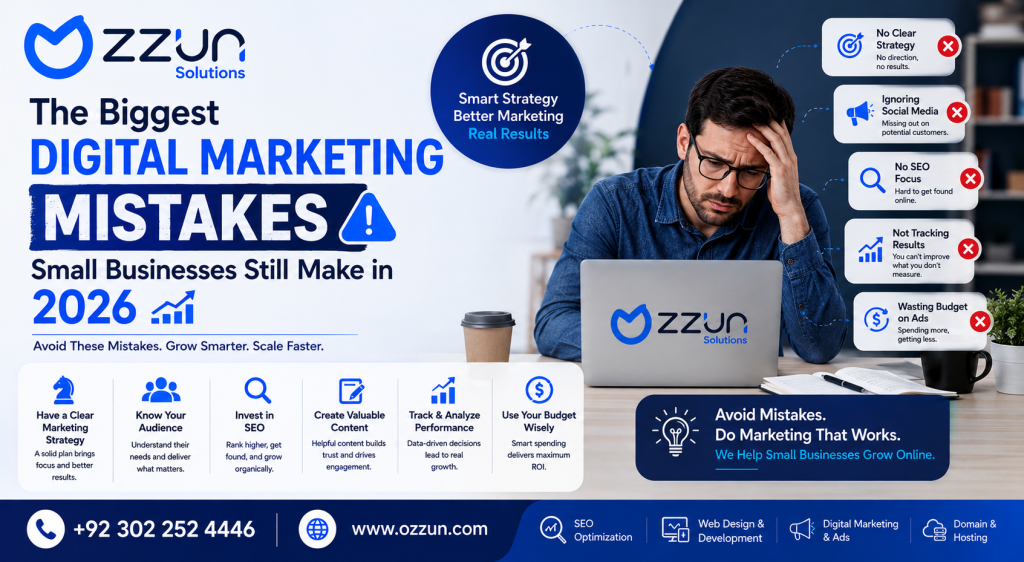
Common digital marketing mistakes like ignoring SEO, having an old website, posting inconsistent content, and tracking the wrong metrics often prevent small businesses from growing online. These mistakes will improve search visibility, attract qualified leads and facilitate better long-term business growth.
Introductory
Attracting customers, building brand awareness and increasing sales are some of the most effective ways for small businesses to achieve this thru digital marketing. But having a website or a social media page is no longer enough.
Competition continues to grow, search engines are smarter and customer expectations are higher in 2026. Companies that avoid common digital marketing mistakes are much more likely to build a strong online presence and generate consistent leads.
Let’s take a look at the most common mistakes and how you can avoid them.
Treat a Website Like an Online Brochure
Many businesses have a website and rarely update it.
On a modern business website, helpful information, clear navigation, fast loading speeds, and strong calls to action should all be present to help visitors take action. An old fashioned website usually equals missed opportunities and less inquiries.
Disregarding Search Engine Optimization (SEO)
One of the biggest mistakes in digital marketing is assuming customers will find your website on their own.
Without proper SEO a professional website can be hard to get in the search results.
An effective SEO strategy includes:
- Keyword research
- Useful content
- Technical optimization
- Speedy Website Performance
- Internal Link
- Quality Backlinks.
SEO is a long-term investment that continues to pay dividends over time.
Publishing Content Without a Strategy
Many businesses are putting up random posts without even knowing what their audience is searching for.
Instead, every blog or page should answer real questions from customers and offer useful information. Quality content gets you found in search engines and AI-powered search experiences, while establishing credibility.
Focus on traffic not leads
Website traffic is important, but traffic alone doesn’t grow a business.
Think:
- Are people reaching out?
- Do they want any quotes?
- Are they filling in inquiry forms?
- Are they becoming a customer?
A good marketing strategy should be designed to convert visitors into qualified leads, not just increase page views.
Inconsistent Branding Across Multiple Platforms
Consumers engage with businesses via their websites, social media profiles, Google Business Profile, and online advertising.
Inconsistent branding, messaging or contact details can undermine credibility and cause confusion.
Using your logo, colors, business details and messaging consistently builds trust and increases brand recognition.
Neglecting Website Performance
Slow-loading websites frustrate visitors and can hurt search rankings.
To increase performance:
- Optimize the images.
- Use a trusted web host.
- Minimize unnecessary scripts.
- Keep plugins up to date.
- Regularly test your website’s speed.
Fast loading website improves user experience and also help with SEO performance.
Not Measuring Marketing Results
Many small businesses invest in marketing without reviewing the results.
Useful metrics include:
| Metric | Why It Matters |
| Organic | Traffic Measures SEO growth |
| Lead Conversions | Shows business impact |
| Bounce Rate | Indicates user engagement |
| Page Speed | Improves user experience |
| Keyword Rankings | Tracks search visibility |
Monitoring these metrics helps identify what is working and where improvements are needed.
Building a Better Digital Marketing Strategy
Don’t chase every marketing trend; build a solid foundation:
- Build a professional website.
- Publish original, helpful content.
- Invest in SEO
- Be consistent with your branding.
- Monitor performance regularly.
- Make the experience better for people using any device.
Businesses that continually improve these areas are more likely to experience sustainable online growth.
Frequently Asked Questions (FAQ)
Digital marketing mistakes to avoid
The most common mistakes are neglecting SEO, publishing poor quality content, having a slow website, inconsistent branding and not measuring marketing performance.
Why is SEO important for small businesses?
SEO is a strategy that enables businesses to appear in search results, attract the right visitors and generate long-term organic traffic, without depending entirely on paid advertising.
How often should you post content to your business?
A few good pieces of content will work better than a lot of content without a plan. Answer real customer questions.
Does Website Speed Impact Digital Marketing?
Yes. A faster website is better for users, helps with SEO, and can lead to higher conversion rates.
How can businesses improve their digital marketing?
A professional website, SEO, quality content, analytics and a consistent marketing strategy combined can help businesses build a stronger online presence and generate more qualified leads.
Conclusions
Digital marketing is constantly changing, but the basics are still the same. Avoiding common digital marketing mistakes can help businesses attract customers, build trust, and grow online. Small businesses can achieve sustainable results in an increasingly competitive online environment by investing in a professional website, improving SEO, creating helpful content, and monitoring performance. A well-defined strategy, along with a focus on continuous improvement, will always beat short-term marketing strategies.