
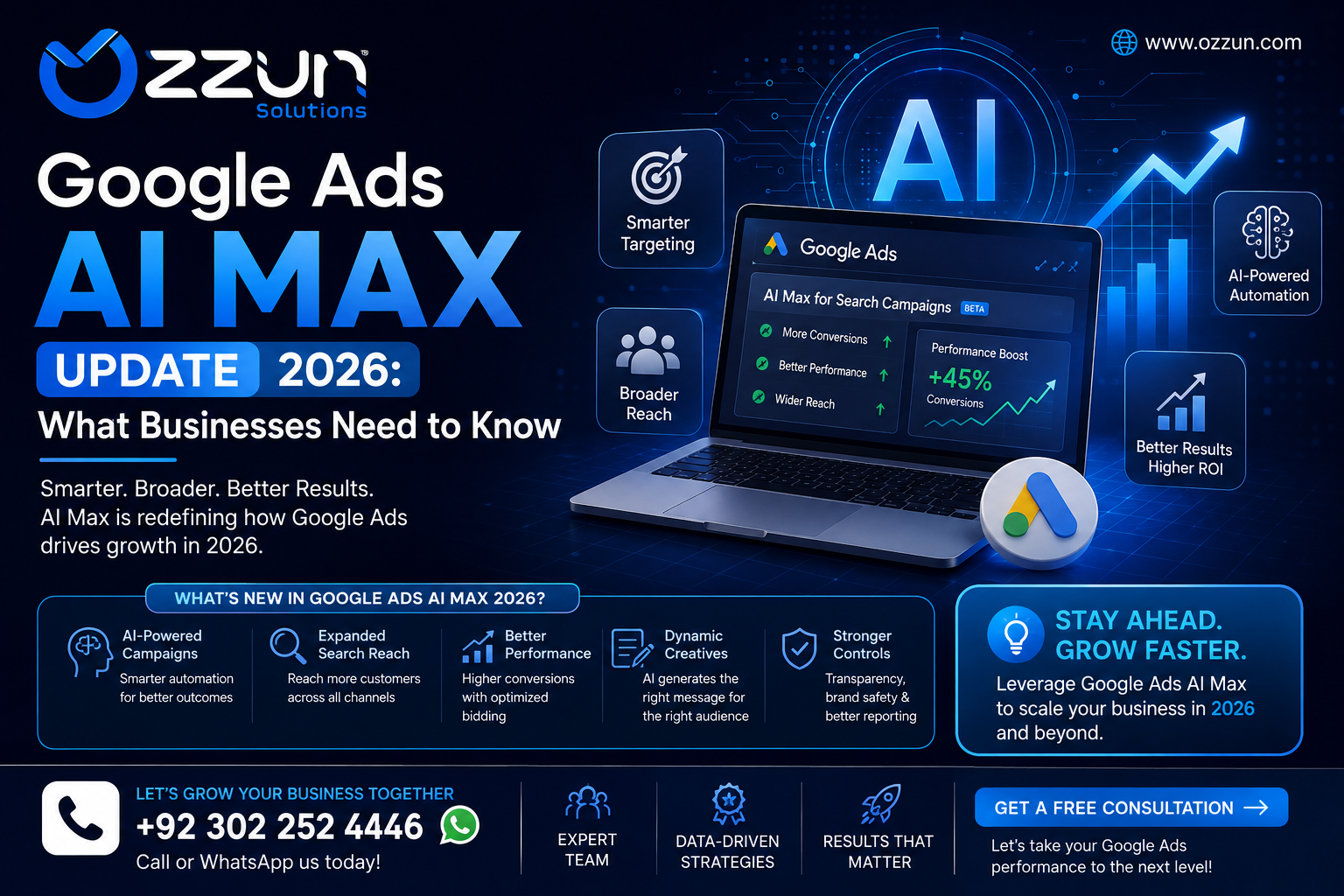
Google Ads AI Max is Google’s new AI-powered upgrade for Search campaigns and will begin automatically upgrading eligible legacy campaign features in September 2026. Google has pushed the full Dynamic Search Ads (DSA) transition to February 2027, but campaigns with Automatically Created Assets (ACA) and campaign-level broad match settings will start to be auto-upgraded in September 2026. Google is advising advertisers to switch to AI Max early so they can review the new controls before the automatic transition.
What Is Google Ads AI Max?
Google Ads AI Max is designed to use artificial intelligence to help search campaigns discover more relevant queries and improve how ads and landing pages are matched to users.
AI Max can access a broader range of signals and AI-powered capabilities, beyond traditional keyword targeting, to identify more opportunities. Based on its internal data, Google says the full AI Max feature set has led to an average 7% lift in conversions or conversion value at a similar CPA or ROAS over just search term matching.
What Is Changing in September 2026?
The September 2026 update is important because some existing Google Ads features are moving toward AI Max automatically.
| Google Ads Feature | What Is Happening |
| Automatically Created Assets | Automatic upgrades begin in September 2026 |
| Campaign-level Broad Match | Automatic upgrades begin in September 2026 |
| Dynamic Search Ads | Full transition extended toward February 2027 |
| AI Max becomes the newer | Search campaign approach |
| Advertiser Controls | New AI Max controls become available |
Google says eligible upgrades are expected to conclude by the end of September for the features included in this phase.
Why does this matter for business?
This is more than a name change if you’re a business running Google Ads. AI Max is redefining the ways campaigns can discover search opportunities and build or customize ad experiences.
This can be particularly useful for businesses looking to reach customers who are searching in different languages, with longer queries, or with variations that might not be an exact match to the keywords originally added to a campaign.
But advertisers shouldn’t expect AI to produce the best outcome without supervision. Campaign objectives, landing pages, tracking conversions, and budget still count.
What should advertisers do before the upgrade?
Businesses should take a look at their existing search campaigns before automatic changes start.
First, determine which campaigns are using the affected legacy features. Next, look at conversion tracking and ensure that key conversions are tracked correctly.
Advertisers should also consider the landing pages and make sure that each page is clearly aligned with the service or product being advertised. A bad landing page experience can’t be saved by AI targeting.
Finally, check out the new AI Max controls and try them out slowly instead of changing every campaign at once.
AI Max Versus Traditional Search Campaigns
With traditional search campaigns, advertisers often have to spend more time managing keywords, search terms, and ad variations manually.
AI Max shifts more of that work to Google’s automated systems.
This is therefore the biggest difference in the balance between manual control and AI-driven growth. Advertisers still retain controls, but Google’s systems can play a bigger part in finding the right searches and personalizing parts of a campaign.
If your business relies on Google Ads to drive leads or sales, knowing about this change ahead of the automatic upgrade can make managing your campaigns easier.
Will Google Ads AI Max Replace Everything? It will not. Google isn’t just killing off all search advertising. Instead, it’s shifting a handful of older features into its newer AI-powered search campaign system.
The timeline also varies for different features. Google has specifically extended the sunset and automatic upgrade timeline for Dynamic Search Ads to February 2027. Automatic upgrades for Automatically Created Assets and campaign-level broad match settings will start in September 2026.
FAQs
When will Google Ads AI Max be launched?
Google Ads AI Max is available now, and automatic upgrades for some eligible legacy Search campaign features start in September 2026.
What is AI Max in Google Ads?
Google Ads AI Max is a new suite of AI-powered features for search campaigns that helps advertisers discover more relevant search opportunities and improve campaign performance.
Are dynamic search ads going away?
Google has delayed the deadline for the Dynamic Search Ads transition, with the full automatic upgrade now slated to begin in February 2027, as opposed to September 2026.
Do companies need to change their Google Ads campaigns?
Businesses using impacted legacy features are encouraged to review their campaigns and familiarize themselves with AI Max controls ahead of automatic upgrades.
Is Google Ads AI Max good for small businesses?
It can be helpful for small businesses that want Google’s AI to find more opportunities in search, but campaign performance still depends on factors like budget, targeting, conversion tracking, ad quality, and landing page experience.
Conclusion
The Google Ads AI Max update. One of the important search advertising changes for businesses in 2026 is the Google Ads AI Max update. Some legacy features will automatically upgrade beginning in September, and the full switch to Dynamic Search Ads has been pushed out to around February 2027. Businesses should now review their campaigns, understand the new AI Max controls, and make sure that conversion tracking and landing pages are ready for the transition.