
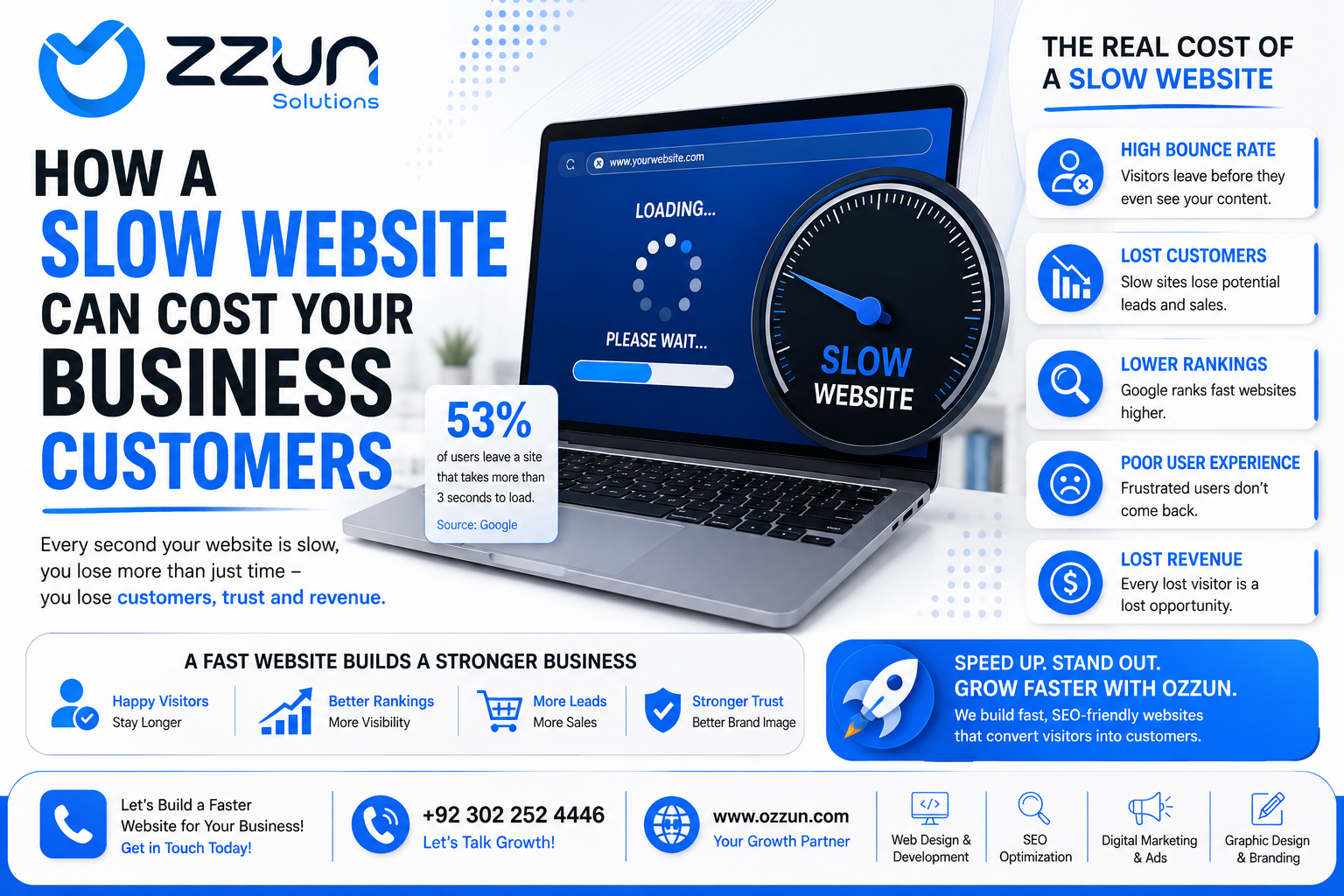
A Slow Website that loads slowly will cause visitors to leave before they get to see your products or services. If it takes too long to load, users are likely to get frustrated, lose interest, and stop using the service, and it could even affect visibility in search engines. Website speed is a vital part of online growth for businesses that depend on their website for leads or sales.
Introduction
Picture a potential client searching for your business, clicking on your website, and then having to wait several seconds for the page to load.
They probably won’t wait.
People expect websites to load fast, especially when they’re browsing on their phones. A slow-loading website can be a bad reflection on a business, and it can make visitors want to look elsewhere.
That’s why web performance is as important as design, content, and marketing.
Visitors Can Leave Before They Even Visit Your Site
The first few seconds are critical.
If a visitor sees a blank screen, images loading slowly, or a page that takes too long to be usable, they may just hit the back button.
That means your business can lose a potential customer before they even get to see your services or products.
Slow websites can kill conversions
Digital marketing is more than simply getting traffic to your site.
The real goal is often to turn those visitors into…
- Customers Leads
- Telephone calls
- Questions?
- Internet purchases
- Reservation requests
A slow website can add additional friction to this process.
Visitors may abandon the process if product pages, contact forms, or checkout pages take too long to load.
Mobile Users May Be Affected More
Smartphones are how many customers find businesses.
Mobile users may be on slower connections or on resource-constrained devices. A website that works quite well on a powerful desktop computer may look much slower on a mobile phone.
A business website must be tested on different screen sizes and connection conditions.
The Impact of Website Speed on User Experience
Website speed is not just a technical issue.
It has a direct impact on how people feel about using your site.
A fast website helps to
- Search information
- Search Services
- Shop products
- Completed forms
- Browse pages
When things happen slowly, people get frustrated and trust declines.
Slow Performance Can Hurt SEO
Website performance also ties into visibility in search.
Page experience is just one of many signals that search engines use to evaluate sites. So, boosting speed can help to make your SEO strategy overall healthier.
But speed isn’t the only ranking factor. Good content quality, relevance, technical SEO, authority, and user experience are also important.
Why Websites Become Slow: Typical Causes
There are many reasons why a website can become slow, including:
- Hosting of poor quality
- Big image files
- Too many plug-ins
- Non-optimized code
- Too many third-party scripts
- Absence of cache
- Bad database performance
- Old website tech
It is important to find the real cause before making changes.
How To Optimize Your Website For Businesses
Here are some simple improvements businesses can start with:
Optimize Pictures
Use modern formats and compress images to reduce unnecessary page weight.
Review Hosting
A hosting environment with the right resources can improve server response and reliability.
Disable Unnecessary Plugins
The performance of WordPress websites can be impacted by unused or poorly optimized plugins.
Use caching. Proper caching can reduce repetitive server processing and help pages load faster.
Optimize mobile experience
Test key pages on smartphones and ensure that the content remains fast and easy to use.
Get a fast website
The speed of your website is not just a technical detail.
A business that invests in SEO, advertising, social media, or content marketing will eventually drive people to its website.
If the website delivers a poor experience, some of that marketing investment can be wasted.
Better performance makes the path from visitor to customer easier.
Frequently Asked Questions
Why are slow websites bad for business?
A slow website can make visitors frustrated, increase abandonment, decrease engagement, and make it harder to convert visitors into customers.
What Makes a Website Slow to Load?
Common causes are bad hosting, large images, too many plugins, unoptimized code, third-party scripts, and poor caching.
Does Website Speed Impact SEO?
Website performance can contribute to the overall page experience and SEO, tho it’s only one piece of a much larger ranking system.
How can I speed up my business website?
Optimize images, check hosting, eliminate unnecessary scripts and plugins, enable appropriate caching, and improve mobile performance.
How fast must a business website be?
The goal should be to get important pages loading and usable as quickly as possible on both desktop and mobile devices. Actual performance depends on the website, hosting, content, and the visitor’s connection.
Final Thoughts
A slow website can cost a business more than a few seconds of loading time. It can mean lost visitors, fewer inquiries, lower conversions, and a worse user experience.
Website performance should be an important part of the overall strategy for businesses investing in their online presence. The right website can give visitors less reason to leave and more reason to become customers.